
Volume 7, Entry 22: Table for None
Addition by reluctant subtraction

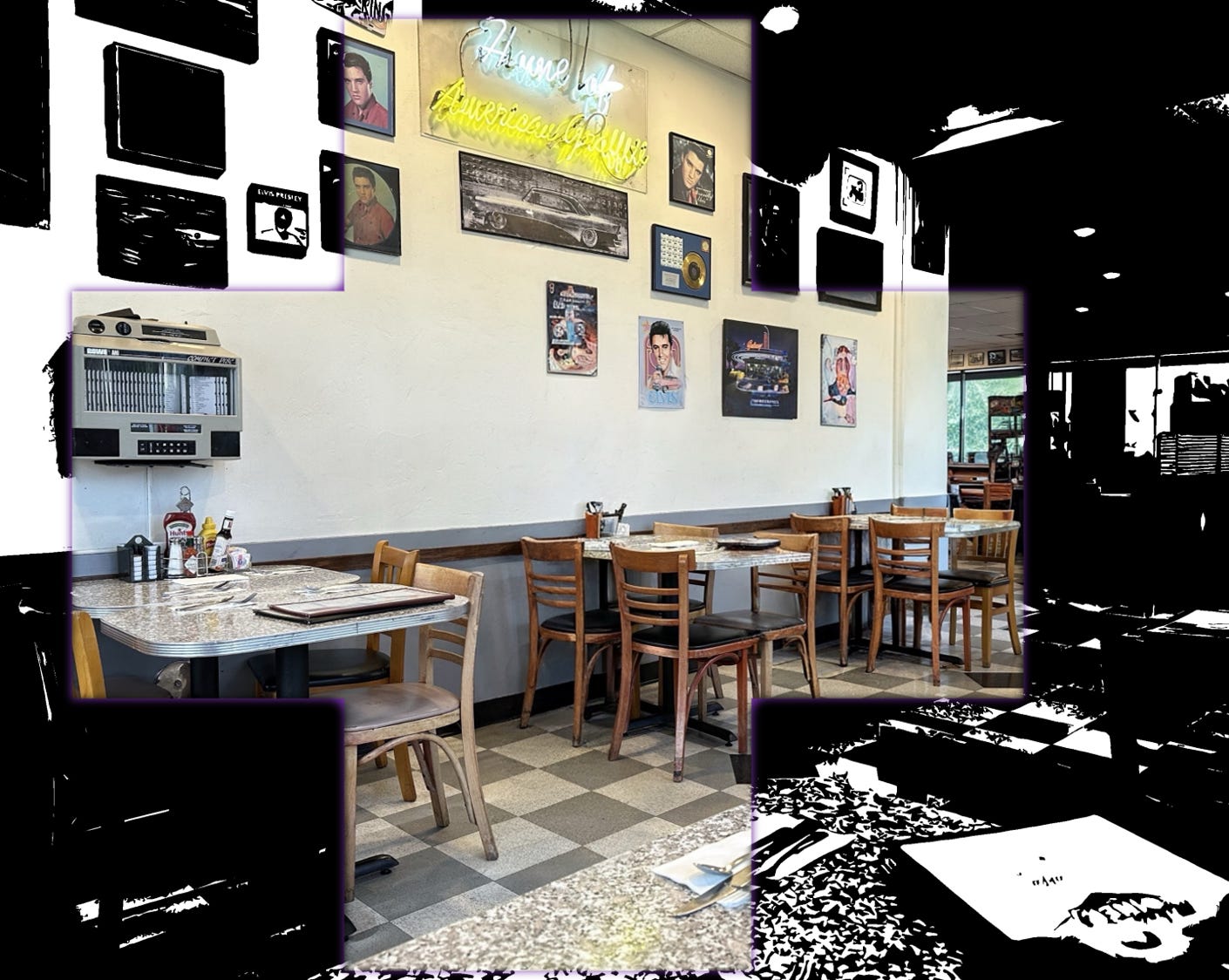
I decided not to host a Gratitude Dinner this year.
That decision surprised me. I love the Gratitude Dinner; it feels like a perfect closure activity for a school year. Instead of ending with the soulless sterility of final exams or the dispassionate grandeur of an arena graduation ceremony, I close with something small and personal. I send invitations to the students who defined my year, meet them all at a local restaurant, and then talk about each one, expressing my appreciation for what they’d contributed to my work and life across the previous ten months. It’s the most purely positive thing that I do.
That abiding positivity makes not hosting it somewhat perplexing. By all accounts, I was on track to hold one again. I assembled a list of invitees, blocked several days on my calendar, and even pulled up the contact card for Mike’s Diner, my venue of choice, in preparation for a call about reservations. Everything pointed toward my hosting one. Everything. And yet, I’m not.
So why did I cancel it? What prompted my sudden change of heart? How did I sour on one of my favorite things? The answer is…well, see, that’s the tricky thing.
I don’t know what happened. Honestly.
A few weeks ago, I was fully on board. Hell, as recently as Friday, I alluded to the event while hugging someone after our final day activity. “I’ll say more later,” I said through sniffles. And I meant it. I presumed I would be calling him up to the juke box ten days later to talk about our weekly conversations and how proud I was when he finally achieved what he’d sought across the entire time I’d known him. Twelve hours later, the event was over before it started.
At no point during the interim did I consciously think “I’m not going to hold this event”, nor was there ever a moment when I weighed the pros and cons and ceded to the latter. The decision happened discretely: a switch flipped, and the Gratitude Dinner moved from on to off. Even though I had time to change my mind and get the whole thing back on the calendar, introspection revealed a sense of security in my choice. It felt right not to host one this year, even though I couldn’t articulate the justification.
The more I sat with that certainty, the more it bothered me. Choosing not to host something as sacred as this event couldn’t go uninspected, so I set out to uncover the hidden catalyst behind my shift. After a weekend of reflection, I arrived at a three-headed monster of motivations informing the decision. None of them justify it, per se—by all accounts, I’m still convinced I should be hosting it—but when combined, they illuminate some of the subterranean processing that led me where I landed.
Let’s dive in.
*****
I. EXHAUSTION
I’m tired. I’m so, so, so tired. I can’t even begin to describe how tired I am.
Three times during this past month, I’ve started drafting essays about exhaustion, and three times I’ve grown so weary along the way that I stopped. Within each draft, I noted the unrelenting gravity in my cheeks that makes smiling hurt and the heaviness of my legs that makes lifting them an ordeal. I’ve been barely surviving each school day upright, adrenaline notably absent from my bloodstream, while every inch of my body feels awkward and wooden. Were I not always standing up, I’d fall asleep in my chair; even while upright, I sometimes drift off while grading.
Before your fingers point toward my sleep schedule, I’ll warn that I’m pretty sure it isn’t that. I’ve been getting far better sleep this spring than during any of the last few years. In 2024, my monthly average never sniffed five hours during school’s final stretch; in 2025, I only cracked five hours during March, when spring break goosed my total. This year, I’ve averaged more than half an hour longer each night, and I’ve maintained discipline about getting to bed on time. Rare is the night when I’m not asleep before 8:30. I don’t think it’s sleep.
Or, I should say, I don’t think it could be just sleep. I did more work than ever this year while aiming to complete a few massive instructional projects, and I’ve written ambitiously from the start, including several pieces that required extensive drafting, revisions, and restarts. Every organization I run and commitment I keep has had a major event or two during these last few months, reallocating what might otherwise have been downtime into additional hours of intellectual engagement. I’ve slept much more than usual, but my waking hours around that sleep have demanded more from me. Those high-stress, high-effort hours add up.
Even so, I’ve taken on huge, extended projects before and emerged with my body and spirit intact, which makes me think there’s another variable at play behind the scenes: aging. I turned forty in March, and while I don’t feel demonstrably different, that milestone birthday made me more aware of my own mortality. It’s easy to claim I’m the same horse as ever when I’m still walking forty miles daily, writing extensive essays weekly, and delivering energy, expertise, and compassion while on the clock, but those things have all been harder to muster than ever. I feel rundown, and I’ve suffered symptoms of illness for months that refused to get better without medication. It’s like my battery’s lost some capacity. I can’t seem to hold my former charge.
Although it won’t be the sole reason behind my canceling the Gratitude Dinner, I suspect exhaustion toppled the initial dominoes in that direction. When the Steeplechase finished last week, I expected to feel freed, but I became a zombie instead. Every additional task—a Site Council meeting, a conversation after school, even grading a straightforward partner exam—felt like the earth on Atlas’s shoulders, an unfair burden on an already-comprised body.
Despite its overwhelming goodness, the Gratitude Dinner would have nevertheless demanded labor from me—videos, invitations, phone calls—and I have so little left in the tank that I’m stalled on the side of the road. I can’t handle even one more thing with this deficit of energy, and my heart’s so similarly overclocked that even the kindest “one more thing” can slip through the cracks in my resolve that look like canyons.
It’s a sad state of affairs to be sacrificing a generous event at the altar of exhaustion, but I am no match for the signals my body keeps sending. I took nine naps this weekend—nine!—and that was to get through a Mongolian barbecue dinner with friends, designing four Mathletes cards, and watching the new Boots Riley film. Getting through that anti-gauntlet on full nights of sleep should have been a breeze, but it was anything but. When I’m dragging myself to Century Theaters, there’s no hope of achieving anything substantial.
Even a Gratitude Dinner.
*****
II. PARITY
For the first Gratitude Dinner in 2016, I invited twelve people.
That was my first year living on my own, and the group who attended orbited everything I did. They competed with Mathletes, attended Challenge Days, raced through Calculus problem sets, and even helped me build bookcases. Making that list was a cakewalk. It assembled itself.
One year later, I again had zero trouble making the list, but the number of names on it exploded. Beginning in 2017, every event afterward included at least thirty people. Zoom accommodated that when meet-ups were impossible, but then Mike’s Diner became the only viable location, thanks to a back room that seats roughly that many.
With increased numbers came a revised vision for the event. Instead of honoring only the students I knew best, I sought to include everyone who contributed something significant to my year. In the same way I can gauge in my gut whether someone merits a spot in the Mathletes Hall of Fame, I can tell when a person earns a Gratitude Dinner invitation. I draft a little T.J. speech about them mentally in the moment. I have become attuned to goodness and found ways to mark it when I see it.
During no year did I set out to hit any particular quota, yet my list always looks the same length come May. It always feels clear that I have identified the right people to honor; there just happen to be roughly thirty of them every time.
Until this year.
Initially, the list for 2025-2026 skewed shorter than usual. When I updated it a few weeks ago, I had only seventeen names on it. They were undeniably correct names, but there were obvious omissions, too. It seemed I had been adding names mentally, not digitally, particularly because I’d written some names so often in my Daily Positivity that it felt like I’d already added them. Their inclusion was self-evident, so no problem. I only needed to type them in officially.
Unfortunately, when I set about fixing the list, I quickly encountered a dilemma: there was an impossibly high number of names. On my initial run-through without referencing the original list, I landed at 49 names—and that omitted the two names that led off my initial list but who aren’t in one of my classes or organizations. And that 51 was being conservative because there were absolutely individuals I would have invited in any other year but that I drew a line on this time due to the numbers.
When I finished counting, even I expressed skepticism. Fifty names is too many names—for the venue and the time slot. Had I become guilty of emotional grade inflation?
In a way, I suspect the answer is actually yes. At this point in my career, it’s easier to earn my appreciation because I notice more. The ethos of this newsletter is noticing, after all, and the principal playground for my noticing remains the job my life revolves around. When I founded the event in 2016, my criteria was primarily total exposure—I invited those with whom I did the most. That made sense because all those events together forged real bonds, but meaningful connections now happen through more diverse means. The list I made for 2026 featured students from each of my classes and from Mathletes and Diamond Day, as well as several I knew best from sharing during Therapy Thursdays, singing with Vocal Ensemble, and arguing about AI over lunch.
Whatever the cause, though, make no mistake: having a list of fifty potential invitees represents a tremendous blessing. Ending the school year feeling like I forged meaningful connections with that many students is an overwhelmingly positive outcome after a taxing ten months. It suggests the baseline connection I engender has risen across the board. I will take that in a heartbeat.
But that ramp-up does come at something of a cost. In exchange for a sky-high floor, there appears a lowered ceiling. The chasm between the people I feel closest to and everyone else has never felt narrower. I’ve grown quite skilled at engineering classroom community, particularly on an individual basis, but that “quite good” complicates selecting people for an event.
Positive though it largely is, this parity especially works against my hosting a Gratitude Dinner this year. To host, I would need to pare my list back, dissecting positive relationships to find a clear dividing line. Including people in things is a fun exercise, but excluding them is miserable—and that’s what a Gratitude Dinner in 2026 would entail. If that sounds like a lot of work to you, it does to me, too, and work while exhausted sounds like a tough proposition. Parity, therefore, provides a warm rationale for skipping the event.
In short, while a lengthy list is a good problem to have—the best problem, really—too many candidates is indeed still a problem.
And this year, I’m solving that problem by opting out.
*****
III. REDUNDANCY
While exhaustion and parity each offer a reasonable explanation for my subconscious turn on this year’s Gratitude Dinner, neither one strikes me as a truly compelling cause for canceling a special event.
Fatigue is my way of life, and it stands to reason that nothing physical literally blocks me from hosting the thing. Armed with a few days of added sleep and space away from school, I will instantly feel more rested—at least sufficiently so to arrange a familiar location and say nice things to people over food. Likewise, while the glut of deserving people makes setting the invitation list an ordeal, it certainly could be done. Whatever the pool size, I’m comfortable swimming through my memories and drawing lines. It would suck to leave people out, but I know I’m capable.
At the same time, if the glove doesn’t fit the first two potential culprits, then their respective acquittals demand a third suspect. And I have just the guy.
Redundancy.
If there’s one cause for my inability to rally behind the event this year, it’s that an event themed around appreciation and admiration feels wholly unnecessary. That is, I don’t need an expensive dinner for 32 at Mike’s Diner to tell the students I work alongside that they matter to me, because I already do. I do it all the time.
Back in December, I wrote “Secret Tribute”, a piece about sneaking affection into unexpected places. While that essay began at invisibly honoring my favorite poet, it ended in a literal mass celebration: sixty-seven capsules of praise and gratitude surreptitiously dropped at the end of the Calculus BC final. Although several students surely clicked right past it, many did not—more than a handful came up in tears, and a few asked me to share what I’d written with them afterward. Those capsules adopted the style I would normally employ at the Gratitude Dinner—but I reached 67 students in December rather than 30 in June.
That was only one instance, too. Those short paragraphs flowed easily from me because I echo similar sentiments all the time. It’s not uncommon for me to seek someone out to thank them or compliment them; I’m unbashful about telling someone they matter or articulating why something they did resonated with me. I do it one-on-one at the door and during tutoring, but I also say my piece with full classes present, as has happened in Accelerated enough times to lose count. There’s always a touch of awkwardness to voicing appreciation out loud, but I’ve done it so often by now that the awkwardness doesn’t deter me. I just say it.
When I first started the Gratitude Dinner, I sought to make love clear that I wasn’t certain had ever come through. I needed a dinner so I could formally open my heart and voice sentiments that had been hiding inside. But my heart is simply more open in 2026. My words aren’t hiding in the shadows anymore. I go out of my way to share that sort of affection regularly now because I understand the fragility of being alive. If I don’t speak now, I risk forever holding my peace.
Would a Gratitude Dinner be nice in 2026? Of course! It’s one thing to express appreciation and admiration within the natural flow of work, but it’s another entirely to pause everything and go out of my way to say the same things over food. It hits different when it’s separate, and there’s extra good in that.
Alas, there may be extra good, but not extra urgency. I simply do a better job at evoking the Gratitude Dinner’s mantra between August and May than I used to, leaving me with less guilt over what’s become an open slot in June.
Because there are as many full hearts as ever.
*****
The safest way to approach the end of this year would have been to let inertia guide me. Do everything I always do; it’s worked, hasn’t it? Don’t mess with the status quo. Just keep going! As someone obsessed with routine, this mindset comes as naturally as any other. For all intents and purposes, there was no reason to change anything in my usual sequence.
When I look back on my year, though, I see a man who pushed back against that kind of complacency. I framed my formal goals for this year around additivity, which meant building on and around already successful things. I alluded to several time-consuming projects earlier, and those were all done in the name of additivity. I created 50 new structured note templates across the AP Calculus cohorts, plus 80 for Accelerated, and I made more than 20 wholly original review games from scratch. Those are just the big projects, too. I did a lot.
None of these things were necessary, by the way. All those classes had been going fine and would have continued to go fine, but the things I made added something. When I sought feedback at the end of each quarter, my students overwhelmingly (and without prompting) cited these additions as helpful, valuable, and memorable parts of their courses. Whether 200 students used a resource or only one class is irrelevant—I’ve left all three courses in a better place moving forward than where they were last year.
On the surface, that spirit of additivity might seem like a strange bedfellow for canceling an event like the Gratitude Dinner. There’s nothing more additive than a celebration of students at Mike’s Diner in June. The most apt ending for this school year which centered on doing a little more would be tacking on an emotional supplement like that event.
Except the direction of the additivity here matters. The Gratitude Dinner would add a little more praise, a little more connection, and a little more lightness to thirty-plus students’ lives, but it would cost me more time, more money, and most importantly, more energy. It sounds selfish to cite those things, but those costs are the truth. They’ve been the truth all year; additivity comes at a price.
It’s fundamental Physics: the Conservation of Matter and Energy. While all the stuff I made and refined added to our wealth of curricular resources, it subtracted hundreds of hours from my life. I kind of can’t believe I finished it all and finished everything else also, but that’s because I worked during hours I would have otherwise spent writing, watching movies, and soaking my feet. The cost of injecting instructional resources and math games into my classes—resources and games, I should add, that were overwhelmingly successful—is the sputtering engine I can’t seem to start as the year comes to a close.
In that way, I’m choosing to characterize the proactive cancellation of the Gratitude Dinner as something additive for me. Even if it’s the nicest thing I do for others, I haven’t been nice to myself all year. After working myself to the bone, I’ve earned a couple of hours without eyes on me. I know it’s the wrong thing to cut, but it’s my final opportunity to show myself some grace after the longest year I can remember.
I know I should say more, but I hope you’ll understand when I say I have nothing more to add.
Okay, yeah, I know. That was clearly the last line of the piece. You felt the cadence, I felt the cadence, the ghost of Millard Fillmore felt the cadence. This should be the end.
Unfortunately, after writing that line, I felt the weight of collateral damage. Skipping the Gratitude Dinner hurts no one…except me. Only I feel its residual weight because only I think about it all year; only I rehearse the mini T.J. speeches I intend to present in June.
The decision not to host the dinner is a binary one, but saying the things I want to say doesn’t necessarily have to vanish when the get-together itself does.
Late in the week, I decided to preserve one part of the Gratitude Dinner: the gratitude. On Saturday night, I recorded myself speaking to each of the 60 students on my list. I never say anyone’s name, but I do note the timestamp for each person’s spiel on my list. That way, I can share with them the only part of the Gratitude Dinner that’s meant to last: my appreciation.
Did this undercut my resolution to gift myself time? Yes, it did—it ruined my final line! But the time I spent on this was a net positive overall, and that’s what matters to me. I haven’t shared it with the students, and I’m not sure when I will, but I will post it here for posterity (no names are used, so it’s shareable). It came to almost three hours! Wild stuff.
Hopefully that leaves an impression on them, too.

I am regularly astounded by how much you do for your work, how much you write, and the many other things you mention in these pieces.
And in one sense I totally and completely understand. As I, too, push myself to the point of exhaustion doing all the things I’ve decided I need to do. And those things do need to be done — because they give me meaning and purpose.
But on the other hand (and I’m speaking purely about me now and not trying to offer any advice) I have pushed myself so hard for so long that I actually don’t know how to stop and rest. It’s been something I’ve been really struggling with over the last year or two. Like, why can’t I just stop and rest? Why do I have to squeeze everything out of every day? Do I think I don’t deserve to rest?
I don’t really know where I’m going with what I’m saying here. I just found that reading your piece sparked a lot of the things I’ve been grappling with.
I also find it kind of interesting how there aren’t any movies where a super driven person learns how to rest. We are very much a ‘doing’ society.
Anyways, I don’t know how to end this comment, so yeah…. Haha
Thanks Michael. :)
I hope you get some rest-no one deserves it more than you!