
Volume 7, Entry 9: Roommates
A new album that feels old

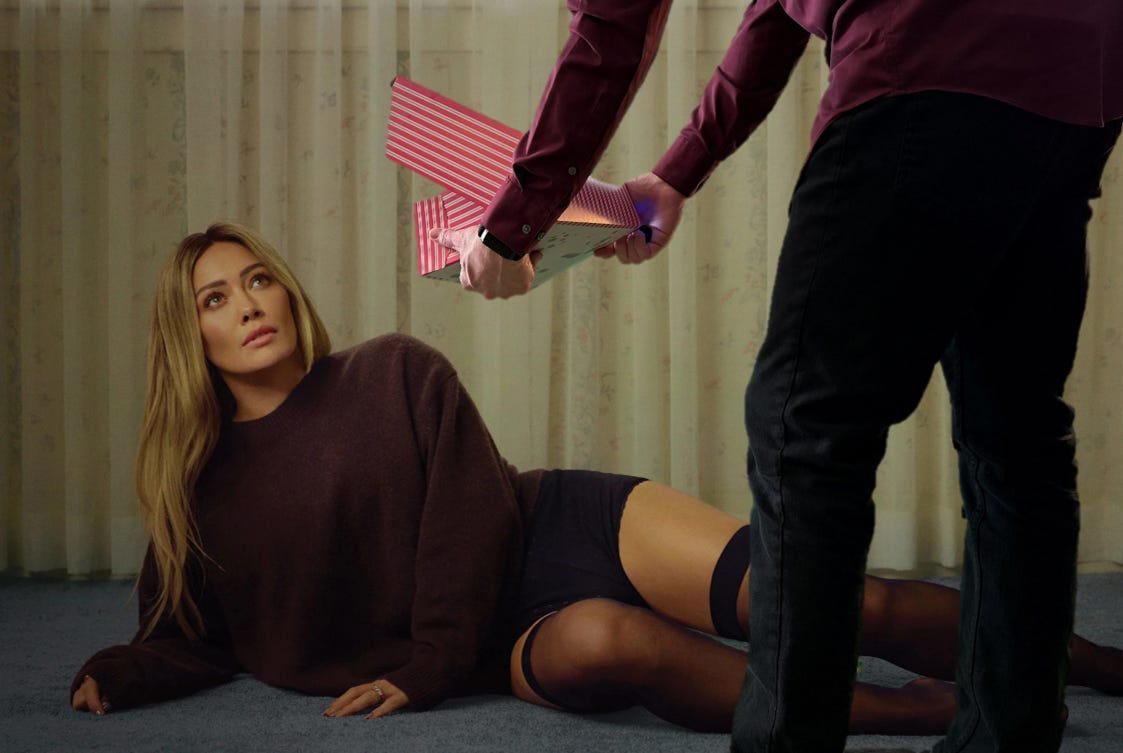
There’s a Cinnabon down the street from school. It’s been there for a few years, but I’ve never gone in. I have a gift card in my wallet as we speak, and I’ve run to Walmart a dozen times to pick up photos or storage boxes, but I’ve never stopped.
To be truthful, I’ve actually never eaten at Cinnabon. Despite so many trips to the Arden Fair Mall, where the south entrance air drips with sickly sweet cream cheese humidity, I always raced past the sweet shop to the hot pretzel stand. I hated cinnamon as a kid, and although that changed later, I still avoided the place.
All this came out during my first period class on Thursday. We had been talking about extinction and dodo birds in that darkly silly way I often do, and somehow my dearth of Cinnabon experience came up. One day later, M* showed up to class with a brown bag for me.
Humorously enough, she bought me a cinnamon roll and a pretzel. Our Cinnabon does pretzels, too, meaning M sent my nose back to the Arden of my childhood. Both items were huge, so I split the pretzel with C*, who didn’t have lunch, and saved the cinnamon roll to supplement my next two breakfasts.
I enjoyed the roll, especially when I followed M’s advice to warm it up, but “enjoyed” is as far as I’d go. Receiving it as a gift imbued it with warmth that buying one myself wouldn’t have, but I found the thing adequately sweetened but under-frosted. What can I say? I snag the corner of a grocery store cake. I’m a frosting guy.
M’s kindness aside, eating a cinnamon roll shouldn’t be remarkable, but it was for me. And I don’t mean because of my Cinnabon rookie status—it’s because I ate it with breakfast in 2026.
After an eating disorder accusation in 2021, I began tracking all my food consumption. Every morning, the first thing I do is open up a Google Sheet and record what I ate the previous night. I navigate four tabs for breakfast, lunch, dinner, and dessert, each with separate columns for the components of my meal.
When I went to record yesterday’s food this morning, I began with breakfast, of course. Per usual, I copied the previous line down to February 21st’s, and then I went to add the cinnamon roll in the empty sixth column. As I did, I made a shocking discovery: nothing else was visible there.
Sure, when I scrolled up, I found some stuff. I ate a graham cracker before my Saturday morning walk three times in January and added a square of store-bought cornbread during another weekend, but that was it. Every single one of the first 52 days of 2026 otherwise saw me eat the same breakfast.
Now, that isn’t truly alarming. This uniformity is intentional: I love my breakfast, sub-optimal though it is. It’s a mixture of flavors and textures, and it feeds me around 800 calories, which sounds like a lot until you realize I’ve already walked roughly 25 miles at a fairly brisk pace before it. I want to eat that food; on most mornings, I want to eat it badly. I’m excited for every bite.
At the same time, zero deviation says a lot. That means I haven’t baked anything, for one, but it also means I haven’t visited Honey’s Donuts, met someone for breakfast, or gone literally anywhere. I almost always grab doughnuts every couple of months; I did twice last year, in February and July. I also went on a cereal kick for a few weeks.
I can’t stress enough how much I’m not complaining about this. Routine rules me; inertia governs everything I do. I prefer to eat the breakfast I do (and alone) because it lets me start my day off productively and on schedule. I’m not angling to disrupt my routine, nor do I need more Cinnabon in my diet. It’s not like that at all.
What I see on my spreadsheet is glorious stability. By pure force of discipline, I have optimized my morning to accommodate everything I do during the one daily window that is truly mine. But the cost of that stability is novelty. My life’s become unbelievably predictable: on February 22, 2025, you could’ve proactively pasted in my next 365 breakfasts and been correct 356 times.
Twenty years ago, I yearned to escape the turbulence of being young. I was sick of attending classes and penning love letters; I wanted to start living, not preparing to live. I was swimming against an endless tide, waves of all shapes and sizes crashing over me, keeping me from the gentle lapping ocean in the distance. I longed for the closure of calm water: answered questions and sustained employment called to me. I wanted to be an adult in more than name.
Fast forward two decades, and with one notable exception, I’ve done everything I ever wanted. I’ve achieved sufficient stability to maintain routines not just for weeks or months but for years. I’ve exceeded my expectations as a professional, I’ve got hobbies and friends, and I somehow even have people I’ve met online who gift me a dash of community. I make enough money to be generous with it. That spreadsheet of repeated meals marks me as the picture of the security I sought.
Yet I feel antsy. Despite having nearly it all, I find myself constantly searching for something else. Some nights. It feels like I’m obsessing over phantom pins in the Everest of haystacks, but other times, those pins prick me existentially until every pore is bleeding. The quiet of now is horror movie music cutting out before the killer enters and starts slashing. The stillness is mesmerizing and terrifying.
While I can blame Cinnabon for igniting the notion this week, this is no new feeling—it’s just a tricky one to talk about. People in a position of privilege lamenting consistency draw eye rolls. It comes out like whining or ill-placed woe, even though I’m simply trying to convey the sensation. Because the people I talk with regularly are almost always older than fifty or younger than thirty, I’ve struggled trying to articulate this experience to anyone, let alone feel understood in it.
That ended Friday. On Friday morning, I finally found a person who gets it. She even went so far as making art out of it, art that I can’t stop listening to, humming, and talking about.
That person is Hilary Duff.
*****
When Lizzie McGuire premiered in 2001, I watched. I knew instantly that I was too old for the show, that Lizzie was speaking to younger audiences and female audiences rather than to me, and I had already turned to sports or video games more than to the Disney Channel. After two or three episodes, I turned it off and never returned.
But…I did watch three episodes, and that was two more than necessary to determine it wasn’t for me. I stuck around because, against all odds, I did identify with Lizzie. She felt awkward and adjacent to the people at school, and she craved broader acceptance, just as I always had. Lizzie’s animated avatar, who chimed in occasionally, made sense to me, too. She was the voice in Lizzie’s head personified1.
Obviously, I found the star cute as well. While Duff played a middle-schooler, she’s only eighteen months younger than me, and that made an impression. So often, the stars playing my age group on TV were much older; they were thirty-somethings playing teenagers just south of “Hello, fellow kids” Steve Buscemi. Like Michelle Trachtenberg before her, Hilary Duff was genuinely my peer.
That brief exposure left me with an endearing affection for Duff to the point that I continued to follow her career. I never watched The Lizzie McGuire Movie, but I definitely watched A Cinderella Story, albeit discreetly at home since I knew that wasn’t for me, either. Over the years, I downloaded her albums and gave them polite listens, and in 2020, Younger became a guilty-pleasure binge, almost entirely on the strength of Duff as its second lead.
It was this enduring fondness that led me to download “Mature”, Duff’s first single in years. Released in November but stumbled upon by me in December, “Mature” immediately earned a ten-play repeat run.
From its title onward, “Mature” refuses to hide from age. Duff, a mother of four, looks stunning in the music video at 38, but her song grapples with the inherent contradictions of middle-aged awareness versus youthful naivety. Ostensibly a send-up of an older man still obsessed with younger women, the song’s chorus observes and attacks his patterns:
She’s taking the bait like we all did
She looks
Like all of your girls but blonder
A little like me, just younger
Bet she loves when she hears you say
You’re so mature for your age, babe
She looks
Like she could be your daughter
Like me before I got smarter
When I was flattered to hear you say
You’re so mature for your age, babe
“Mature” is far from the first song centering on a man like this one; Taylor Swift has “Dear John” and “Would’ve Could’ve Should’ve”, after all. But what struck me about “Mature” was the way Duff’s lyrics persistently diminish her, too. This new girl is “younger” and “blonder”, two adjectives that the singer righteously trades for “smarter”, but there’s still a comparison being made.
This is a deliberate choice. The singer could impeach the older man in question for dating young blondes flattered by his illusions of sophistication, but Duff doesn’t exclusively frame it that way. Rather, she explicitly compares the “sweet kid” who takes the bait to her. There’s no hint of rivalry or jealousy in “Mature”—not in the least—and she skewers all the light-dimming tricks he uses to manipulate his target, but yet there is also self-incrimination where none is needed. “Mature” mocks the lack of maturity in the man feigning wisdom, but it also acknowledges what the singer has swapped in exchange for it.
Duff’s single marked the precursor to her first studio album in years. luck… or something, which her team released last Friday, represents a gloriously cohesive account of ending one’s thirties. Rich with addictive beats and accessible lyrics, luck… or something scowls at the foibles of nearing forty and yearns for extinguished youth without losing sight of stability’s perks.
Throughout the playlist, Duff admits to silly insecurity and lustful longing for the tumult of being twenty, but she also recognizes her own clouded vision. To have arrived where she has—happily married, enviable career, a gaggle of children—is a remarkable blessing, yet there’s nevertheless this nagging sense that something vital and urgent is missing. Because of course something is: her youth.
It starts from the album’s first lines. “Weather For Tennis” opens with a catchy melody that might have headed a track on the Lizzie McGuire soundtrack, but the tune serves up the lines “I’m a seasoned apologist” and “I’m an amateur psychologist”, immediately evoking a balance between experience and the opposite. Duff also calls herself a “kid” to counter the “starter of wars” husband with whom she “argue[s] until dinner time” and “fight[s] over semantics” while drinking wine. It’s a song about being wealthy enough to play tennis but settling for acrimony as entertainment, every petty line oozing the chaos of lingering squabbles inside an opulent home.
Other songs revisit this motif of relationship malaise. “We Don’t Talk” confronts the growing distance between Duff and her sister head-on. After each rich and reflective verse, the chorus merely repeats “We don’t talk” over and over again. Because they’ve lost touch, she has nothing else to say.
A more frequent target on the album is her husband. “You, From The Honeymoon” bemoans the dissolution of their once-urgent connection into complacency. Duff still loves the same man she did so long ago, but she misses that previous iteration who was “emotionally gentle without the sleeping pills or benzos”. It’s a song about observing change not maliciously but wistfully.
Granted, in the context of Duff’s album, it’s almost silly to center my analysis of her increasingly stale marriage on “You, From The Honeymoon”. As informative as that song is, it doesn’t hold a candle to an earlier one.
A song I’ve listened to 182 times already.
182 and counting.
*****
Although much of luck… or something addresses dissatisfaction, no song brings her concerns to life more profoundly than “Roommates”.
As they did with “Mature” in November, Duff’s team also released the eventual second track as a single, sharing “Roommates” with the world on January 15, 2026. I began listening to it the same day; I fell in love with it after two plays.
“Roommates” might be the whiniest track on Duff’s entire album. It’s a catchy song with a bouncy rhythm, an earworm through and through, but it pulses with desperation and neediness. Like several later tracks, “Roommates” seeks the emotional and existential fulfillment of youth and vitality, but through a narrower lens.
Primarily, “Roommates” begs for physical affection.
I’m told that “Roommates” received some derision online, and I’m not surprised. Duff paints a jaw-droppingly unflattering portrait of her love-starved self in the song. There’s nothing metaphoric here: she wants to be wanted by the distracted and disinterested man who isn’t responding while his wife’s “tryna give [him] hints”. While acknowledging that “life is lifing and pressure is pressuring”, valid rationales for a man to be inattentive to someone as beautiful (and, here, laughably accessible) as she is, the stalemate between them drives her crazy, feeding even greater anxiety about the transformation time and togetherness have wrought upon her.
What does she wish for? Well, that’s what garnered snickers in the greater discourse. The picture Duff paints of her longing is decidedly shallow and messy:
I only want the beginning, I don’t want the end
Want the part where you say goddamn
Back of a dive bar, giving you head
Then sneak home late, wake up your roommates
The former Lizzie McGuire singing about oral sex in a bar creates some cognitive dissonance, to be sure. The same is true when she sings about “touching herself at the front door” and “looking at porn” because her partner “do[es]n’t look [her] way no more”. These are graphic scenes painted by a former Disney Channel starlet, which is to say, I chuckled when I finally caught the exact lyrics after an early listen.
Still, that chuckle is no insult to Duff, especially because I suspect “Roommates” courts that reaction. To wish for such a dingy, superficial attachment reinforces her desperation—a desperation fueled by something grander than sex. That silly moment, which she invokes three separate times, captures the overwhelming nature of young love. The attraction is so strong at first that nobody can wait to act on it; that dive bar setting underlines the intensity missing from her life.
She spells it out even more clearly a few measures later:
Want the highlights, ten out of ten
The butterflies from holding your hand
Before we swept us under the bed
And we became practically roommates
Yes, the singer wants to be touched physically right now with such ferocity that she (quite literally) takes it into her own hands, but she also wants to feel alive and uninhibited again. She wants desire to wallop her and make things messy again; as a friend put it, she craves the uncertain tension of that early rendezvous.
Of course, in that moment, what the younger Duff surely sought deep down was someone to grow old with, someone to raise a family with, someone to love with the regularity of a sunrise, but what she felt was fire. There’s no replacing the giddy glee at the beginning; what follows is almost certainly richer, packed with the nutrients of nuance, but it’s different. It’s gentle heat at 38 versus an auto-fire flamethrower at 22.
But it isn’t all about attention from a man: she also wants to be an object of desire once again. Confessing that there’s another layer to her lust, Duff weaponizes the song’s bridge to unload her inward insecurity:
I wanna stay your new girl
Always-think-I’m-cute girl
Only in the whole world
I’m paranoid of new girls
All the shiny cute girls
God, it makes my head swirl
She felt beautiful, radiant, and invincible in her twenties, like her now-husband’s eye couldn’t leave her. That’s what fed the moxie to make her move when and where she did. Everything that challenges her about 38 was missing at 20. She lacked a home, a partner, and a family, making her a glorified kid, but the blaring volume of passion drowned out everything future Hilary would worry about. Vigor seems infinite when you’re young; it peters out when the doors of stability close behind you and lock you in.
Perhaps the cleverest part of the song’s construction is the title’s role in each chorus. In its first appearance, the “roommates” are objects caught in the explosion of volcanic passion. They sleep in the background, nourishing themselves for productive days to come; they are unattached tokens of everything that came before that dive bar. But then, as a cruel twist of irony, each chorus ends with the word recast: now, together in their tepid tomorrow, Duff and her lover become those inert NPCs snoozing in the other room. They just live together, no surviving hint of the torrid affair that once might have woken the guys down the hall.
It defies logic to achieve certainty but long for chaos, but such is the contradiction of middle age. “Roommates” gets that contradiction: it’s honest, vulnerable, and blush-inducing.
I love it.
*****
luck… or something brandishes Hilary Duff’s discomfort with aging like a master swordsman. Duff sings as though she’s haunted by the vigor her age packed in mothballs two kids ago, and she is: something she had, something vital to the success that propelled her to her present plateau that millions, if not billions, would kill for, is lost forever. Her album surrenders all illusion of resurrecting her shallow, immature former self, wallowing in the distrust and darkness of growing old.
But to the artist’s credit, her album does more than lament the passage of time. Instead of doubling down and wallowing in the unease that aging induces, the singer enlists her final tracks to own her dramatics and ultimately embrace the silver linings of growing old.
First, the singer accepts responsibility for projecting her insecurity. In “Holiday Party”, Duff addresses the seduction of her husband at a work function. Such behavior would be damning…if it weren’t an elaborate fantasy constructed by the worrisome singer.
Instead of casting blame elsewhere, Duff owns her role as the architect of her insecurity:
In my head you live another life
Where you fuck all my friends
And wish someone else could’ve been your wife
I love you, I love you
I’m sorry, I’m sorry
For letting it get the best of me again
I’m too emotional
Here, we find someone guilty of manufacturing her own romantic inflammation. While meandering through the torrid (and, again, wholly fictional) seduction of her regretful partner, she battles her own fragility. A refrain of “In my imagination” heads every chorus, and an apology interrupts every verse, so she knows she’s being ridiculous, but her grip on reality falters every time. Imagining “that [other woman’s] body…with her eyes so starry” pierces her confidence. Amid decades of familiarity-fueled stagnation, her husband surely must crave novelty, she reasons; moments later, Duff feels jealous of an invented rival with everything she’s lost by 38.
Next, there’s “Mature” and its celebration of awareness. Although Duff can’t help but compare herself to the young woman seduced like she once was, the song champions growth in a way no track before it has. It is cathartic to eviscerate the man’s lack of maturity, but it’s a triumph to celebrate that the mature one, after all, is her. She needed time and age to get there.
Duff next addresses the changing relationship dynamics that have colored so many previous tracks. In “Tell Me That Won’t Happen”, unease unequivocally remains. “I’m worried that I’ve felt everything I’ll ever feel,” she sings to lead every chorus, revisiting the loss of youthful discovery, but then she turns outward with that worry in a more productive way. Instead of ruminating, she enlists her partner’s help in overcoming her “dreaming in past tense”. “Tell me that won’t happen,” she begs him.
The bridge takes it one step further:
Hold me
Meet me
Where the vision in our heads
Never blurs and never ends
Go around with me again
For a woman who rued missed hints and romanticized sloppy bar encounters a few tracks earlier, the contrast is staggering. Here, Duff is direct, asking her husband rather than hoping he notices her. Yes, she still questions everything—the quality of their sex, the sustainability of their connection—but she’s firmly out of her “Roommates” box that saw her silently spiraling out in the corner.
Soon, the contours of optimism arise:
Hold me
Meet me
Where we never get too tired
And we never lose the fire
And the new never expires
Tell me some words that are dirty in French
Give me some first times like we still got ‘em
Here, Duff uses a run of imperative verbs to seek collaboration, and for the first time, we discover a singer willing to entertain the possibility of good still to come, of discovery and wonder yet to be found with the man she married. “Tell Me That Won’t Happen” features fifteen question marks, so she isn’t out of the woods completely, but there’s finally closure to her relationship woes. She wants to figure it all out with him.
While track ten charts a course for ongoing partnership, the final track on luck… or something confronts the mirror. Underneath every despair and anxiety on the album rests Duff’s loss of her youth. No matter what peace she makes with aging, there’s no changing that her former glow is gone. Twenty years and four kids will do that.
But in “Adult Size Medium”, Duff subtly shifts her previous tact. Although she still struggles to recognize herself in the mirror and feels like she’s “waking up to a dream sequence”, she doesn’t shy away this time.
What begins as self-incrimination and doubt
Was any of it worth it after all?
Is my reflection someone else’s I stole?
transforms into something hopeful
But if it’s mine can I still keep it?
If I can’t see me in it
as she seeks to hold onto this mysterious new iteration who needs larger clothes.
Still, with the note of optimism floating in the air, Duff punctuates her album with a final run that continues to get me choked up even on my twentieth listen.
After rattling off a list of random memories, some of them similarly awkward to the details in “Roommates”, she lands in a moment of warmth eleven tracks in the making:
I remember it all
And I remember nothing
How did we get here?
Was it luck or something?
Was it luck or something?
Poetically, her final line apes the album’s title, and that gesture reinforces an important part of Duff’s ultimate thesis. Although the awkward perils wrought by middle age and long-term stability remain adversaries, the first words we see and the last words we hear her sing speak to the overwhelming privilege of her life as it stands.
The doubt is still there; it will always be there. But Duff now accepts how damned fortunate she is to be living her life.
I suspect we should all take note.
*****
Stability is a strange thing.
In reality, we should celebrate when everything is stable. When we arrive at a plateau, we should drop our bags, revel in a vertical journey’s end, and relish the view. After climbing and climbing, we’ve landed somewhere secure. We can rest. We can recharge.
If we do rest, though–or at least when I try–a disquiet sets in. I look around, notice other mountains in the distance, and feel compelled to climb them. To rest feels like squandering an opportunity; the status quo becomes an enemy to progress. I was put on this earth to do more than admire the view, I argue to myself. Time to go.
Although I invoked a breakfast spreadsheet and Cinnabon in the opening to this essay, it won’t surprise you that the malaise I feel in this moment is much closer to Hilary Duff’s discomfort than my Clif Bar consumption. Like hers, mine is less about regrets than simply about the dissonance between twenty and forty. Certainly, there was incredible tension two decades ago when the future still hung in the balance, but there’s excitement to the unfolding that accompanies it. Like Duff, a part of me instinctively worries “that I’ve felt everything I’ll ever feel”. A part of me sincerely believes that all the best parts of my life will forever be in the past tense.
In this way, luck… or something might be the perfect media for me to obsess over as the calendar turns to March 2016. It’s catchy and fun music, yes, but also honest, vulnerable art about growing old that revels in the unglamorous details. In every conceivable way, I love this, but more importantly, I’ve needed it. I’ve needed permission to talk about how awkward my own stability feels without my words being waved off as some cliche midlife crisis. There is no crisis here—just an acknowledgment of the feeling. Duff delivers such an acknowledgment splendidly.
But while the singer unearths peace by reaching out to her husband for support, I don’t have that same option. I’ve struggled all week to choose a fitting conclusion for this piece because I couldn’t figure out how to replicate the closure she achieves by the album’s end. What does a loner who walks in circles all day and eats 356 Clif Bars per year do to accept his gray-flecked stock and celebrate the potential for future growth? How do I take Hilary Duff’s cue and make it my own to prove to myself that my enviable stability need not mark stagnation?
That’s a huge question—too huge for the final lines of a glorified music review. But I don’t need a huge answer to follow my existential roommate’s lead. I only need one thing to honor luck… or something on this day so I can feel like I’ve subverted stability’s seeming stagnation. Even a simple one will do.
How about a box of doughnuts?
I had far too much to say this week about luck… or something and many other things, but I took a cleaver to my first draft on Friday and tried to reconstruct the pathway through. A part of me wanted to devote the entire piece to “Roommates” alone, but the way Hilary Duff ends her album moved me too much to simmer in track two for the entire essay.
After watching Kokuho with Matt on Sunday and Sirāt on Wednesday night, I am finished with this year’s Oscar’s Death Race. I’ve started putting my rundown together. I’m looking forward to writing about the often-great stuff I watched.
That is all.
How quaint that Lizzie’s was a twitchy girl rather than a murderous cockroach...
I’m a few years younger than you — turning 35 this year — but I this piece still really resonated with me. The disquiet of stability and aging is so strange and hard to parse out. And it seems weird for us because for people older than us we are just scoffed off as “still so young”. But I think that’s a part of why it’s hard to make sense of — this is the time, in your mid to late 30s, when you first start really thinking about aging and what your life has become.
I was thinking just the other day how so many of the things that bothered me (or should I say caused me deep depression and anxiety) in my twenties have seemed to soften and ease, partly because of my own inner work and partly just because time seems to help. But on the other hand, fuck man, how I miss the way my body moved when I was twenty and even more so, how confident I was in my ability to move it. For me, the back injury felt like I was slapped in the face with mortality, aging, decay and all the fear and fragility that comes with it. And while I know my experience isn’t the normal trajectory— I know you can relate.
As for the stability thing, I feel like the funny thing about life is it has a way of shaking things up (or down) right when we think we’re comfortable. Which is to say, maybe we don’t have to go looking for the next mountain to climb, maybe it will present itself in time.
Sorry for the random rant, thanks Michael :)
Our curiosity does not stop, even in our quietest moments.
Happy early birthday Steele. May your months be interrupted with donuts and your breakfasts remain mostly uninterrupted :)